Translated by AI. This article was originally written in French and translated by Claude, Anthropic’s AI. The French original remains the reference version.
One of the most inspiring aspects of my journey towards using open-source tools exclusively has been discovering open collaboration and the tremendous power of the community that comes with it. In this chapter, we will explore the benefits of open collaboration, collective innovation and a strong community, highlighting the principles of this approach.
The Foundations of Open Collaboration
Open collaboration is a philosophy based on sharing, cooperation and openness. It encourages individuals and groups to work together in a transparent, free and often decentralized way. This approach has profound implications, not only in the open-source world, but also in the professional world.
Decentralized collaboration and the richness of multicultural perspectives
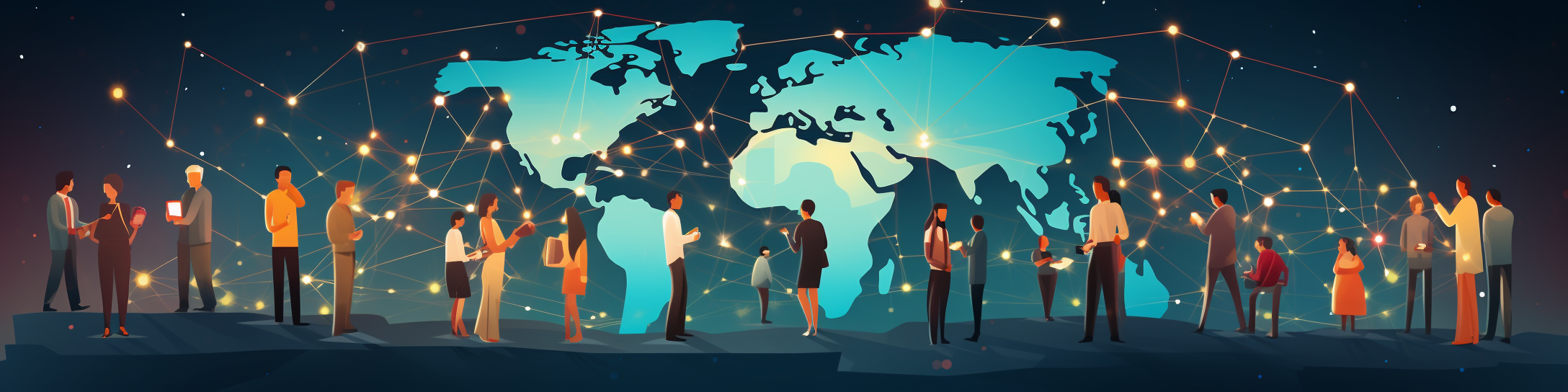
One of the most stimulating aspects of open collaboration is the chance to work with people from different countries, cultures and languages. As a follower of this philosophy, I have had the opportunity to collaborate with people from all over the world, using the languages I speak: French, English and Spanish. This cultural diversity brings an endless wealth of viewpoints, experiences and expertise. It reinforces the idea that innovation is born from diversity.
“Collaboration is an opportunity to discover new perspectives, push the limits of creativity and enrich our ideas through the diversity of contributors.” - [Quote from Linus Torvalds, creator of Linux]
The power of asynchronous collaboration
One of the key strengths of open collaboration is the flexibility offered by asynchronous work. Working with people spread across different time zones means collaboration can continue around the clock. Contributions happen according to each person’s availability, creating a continuous working dynamic. This makes it possible to take full advantage of available talent, regardless of geographical location.
A few training courses exist and are very enriching. I have taken them and try to integrate their key concepts into my daily life.
Limit the use of email and favor a single repository to write, document and interact. This is a “single source of truth” that makes information easier to find, simplifies onboarding and avoids scattering.
Use persistent chats so that, whatever their time zone, people can catch up on discussions during their own working hours. Many tools exist: Discord, Teams, Slack, Nextcloud Chat.
Build relationships remotely: virtual coffees, cross-country projects, peer reviews across regions. All of these form a solid foundation for asynchronous collaboration.
I cannot recommend GitLab’s work on the subject enough. GitLab has pushed its All-Remote strategy very far and, since they apply their own principles well, everything is documented in GitLab’s Guide to All-Remote.
The courses provided by GitLab are excellent. They require practice and regular revisiting to stay focused on applying them.
| Course | Content |
|---|---|
| Remote Team Management | Leading in a remote environment, building a remote culture and organizational practices, assessing how ready teams and managers are for remote work, creating a basic strategy to implement a remote transformation |
| TeamOps | Focuses on solving the following challenges: delays in decision-making, meeting fatigue, poor internal communication, slow handoffs and delays in the workflow |
Open source in the professional world
My experience in the open-source world has also led me to apply these principles in my professional work. I developed an open-source framework within my company, accessible to all employees. Knowledge sharing, comprehensive documentation and open access to information are key elements of this approach. It fosters transparency, innovation and collaboration, while removing communication barriers within the company.
“Open source within companies creates an ecosystem of innovation where every individual can contribute to improving processes and to the growth of the company.” - [Quote from Eric S. Raymond, open-source thinker]
The example of Arch Linux: a strong community
My move to Arch Linux allowed me to fully experience the strength of the open-source community. Arch Linux is not only a Linux distribution, but also an active and dedicated community. Users and developers work together to maintain a robust and flexible operating system.
“Open source is not only about sharing code, but about sharing knowledge and skills and building lasting relationships in a strong community.” - [Quote from Linus Torvalds]
The Benefits of Open Collaboration and the Power of Community
Open collaboration and a strong community open the door to many benefits:
Collective innovation: the diversity of contributors and perspectives drives constant innovation.
Knowledge sharing: open source encourages knowledge sharing and continuous learning.
Transparency and trust: open collaboration builds trust and transparency within the community.
Flexibility and agility: asynchronous, decentralized collaboration allows greater flexibility at work.
Open-source contributions
Interacting with the open-source community is an essential part of my approach. What makes this interaction all the more rewarding is that it goes both ways. Just as the open-source community provides me with exceptional tools and solutions, I strive to contribute back to that same community, as far as my skills and means allow.
There are many ways to take part in the free software community, and everyone can find their own way to contribute. Contributions can take many forms:
Reporting bugs
Suggesting improvements or new features
Writing code
Reviewing other contributors’ work
Translation
Presentations
Teaching (videos, articles, involvement in associations)
Helping others on forums, Reddit and Discord channels
Personally, I am actively involved in several open-source projects, depending on my skills and interests. My contributions include reporting bugs and suggesting improvements for solutions such as OPNsense and Nextcloud. I have also contributed by creating YAML descriptors for TrueNAS, translating for Arch Linux and for Cardiac’s Architect project, and working on the layout of the Architect project, which aims to make Arch Linux easier to use for desktop users.
During 2023, I modestly made around 200 contributions to these various open-source projects. My involvement in the free software community is a way to thank and support the developers and contributors who created the tools I rely on every day. It is also a way to take part in the continuous improvement of this software and to give back to the community what it has given me in terms of freedom, transparency and reliability.
