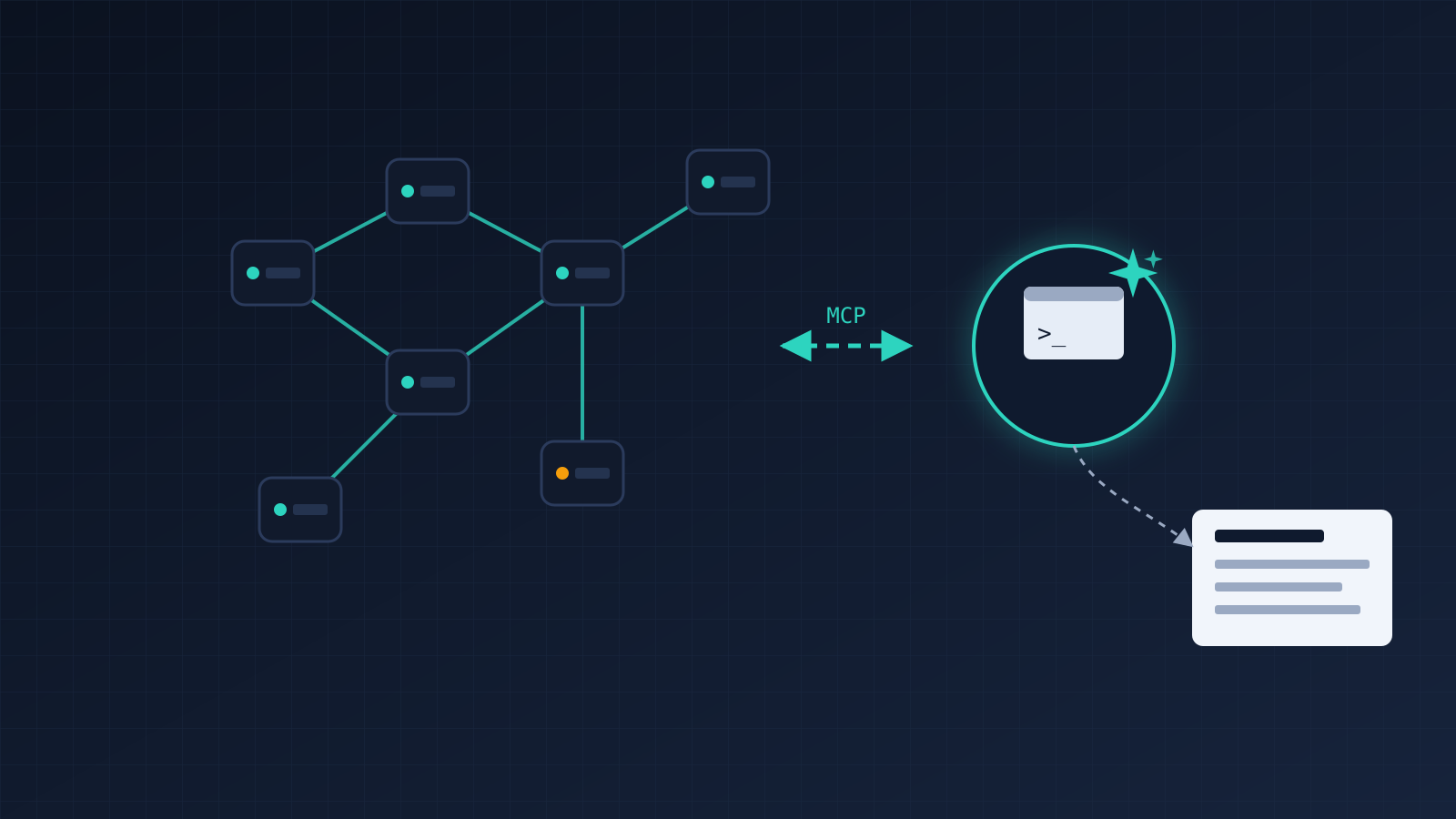
A network map connected through MCP to a Claude Code terminal, which feeds a documentation page

Homelable: Mapping and Documenting a Homelab, with Claude Code as Co-Pilot

After GitHub, the homelab documentation found a new home in Homelable, a free, self-hosted tool connected directly to Claude Code through MCP. On the menu: network, exposure, organization and decisions. Written with AI.

September 25, 2026 · Etienne & Claude (AI)
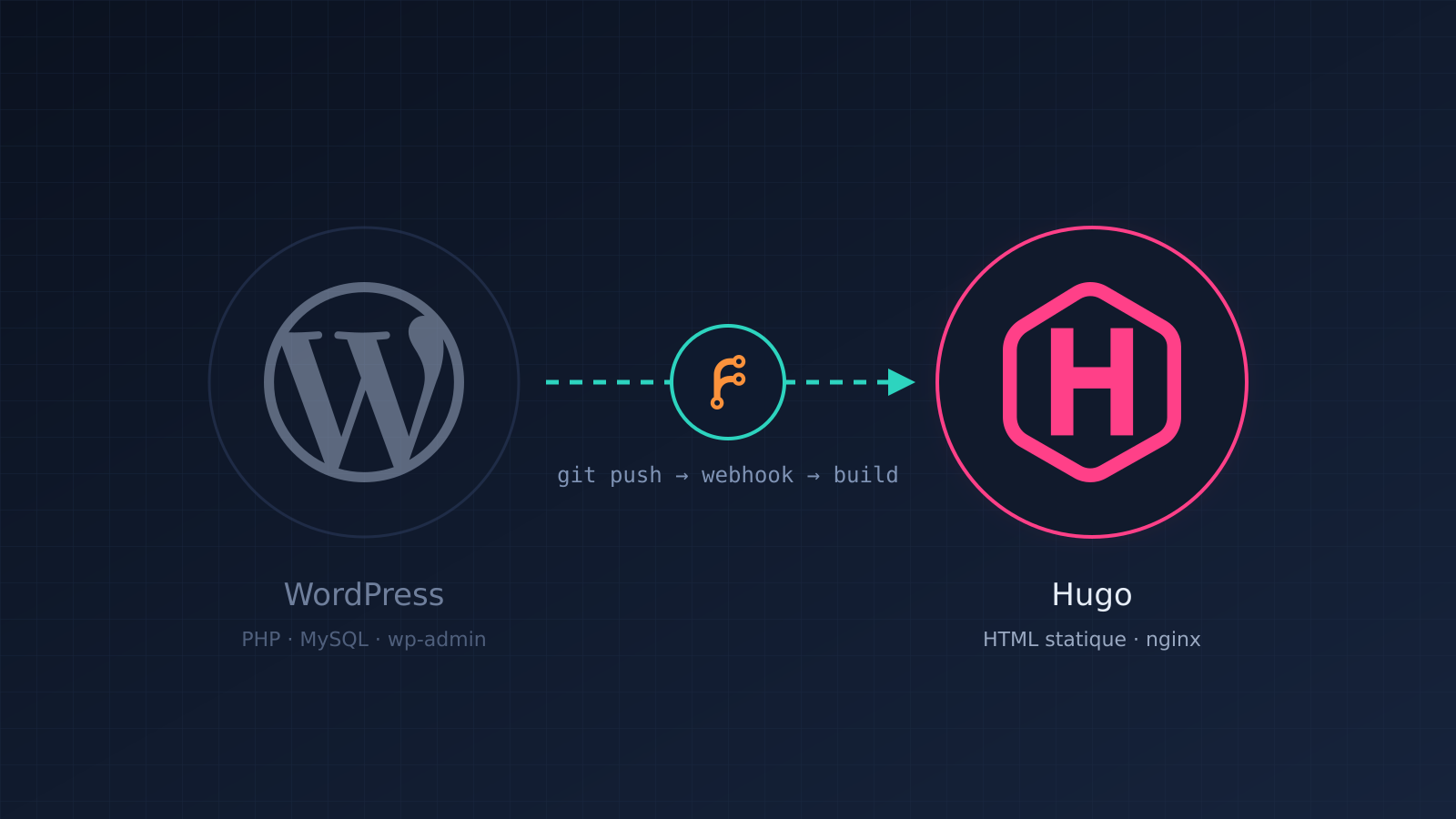
The WordPress logo, faded, connected by a git push, webhook, build pipeline to the Hugo logo

From WordPress to Hugo: Continuous Deployment, a Smaller Attack Surface and a Cleaner Homelab

Goodbye WordPress: this blog now runs on Hugo. A simple git push is all it takes to publish an article through Forgejo and Dockhand, and the homelab becomes safer and easier to maintain. Written with AI.

September 25, 2026 · Etienne & Claude (AI)
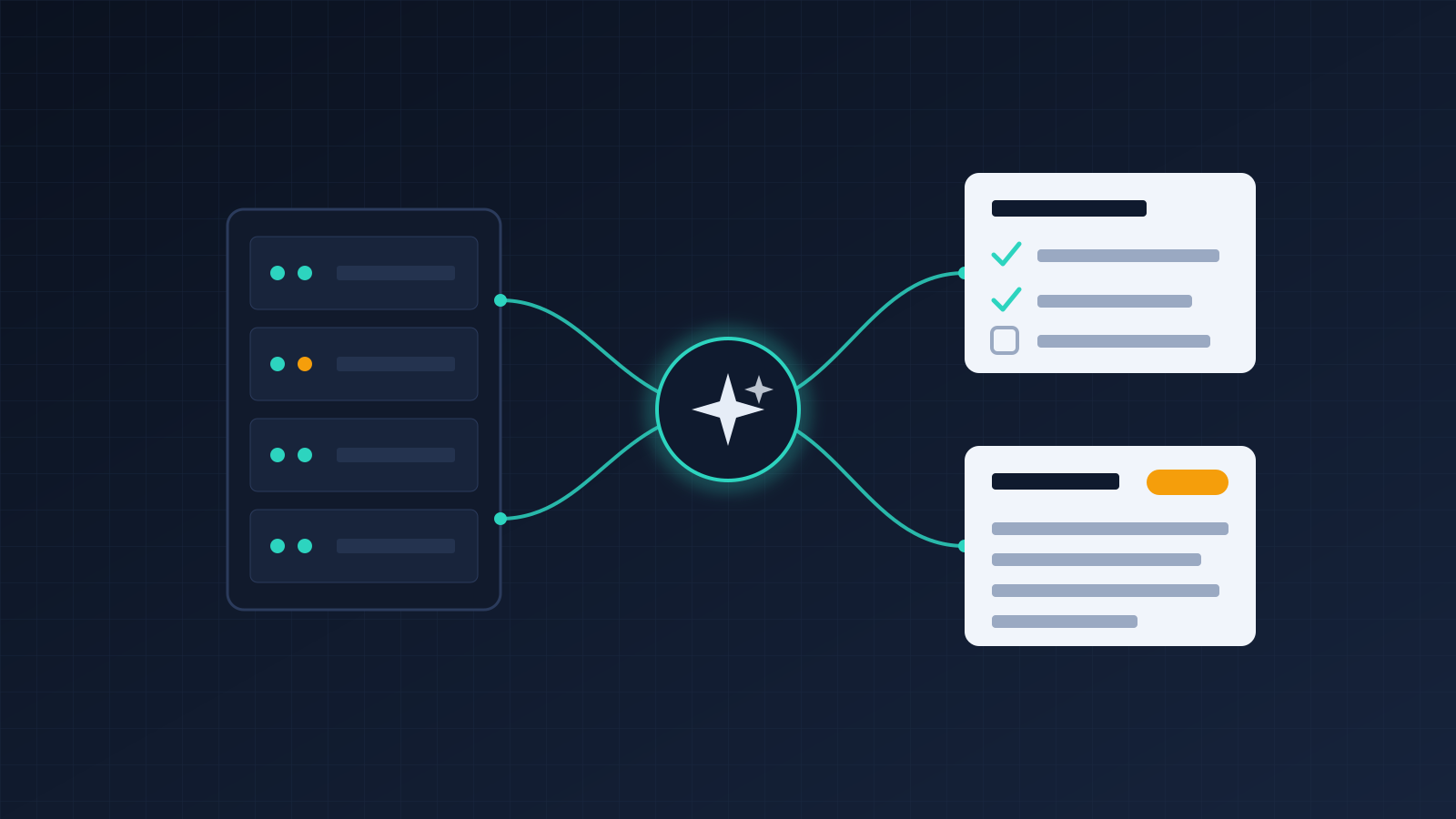
A server connected, through a central node representing the AI, to a checklist and an incident report

Running a Homelab with an AI: Living Documentation, a Backlog and an Incident Log

Up-to-date documentation, a prioritized backlog, an incident log, recorded decisions: lessons from running a homelab day to day with Claude, an AI connected to the documentation. Written with AI, and openly so.

September 25, 2026 · Etienne & Claude (AI)

Larry Sanger and De-Googling: An Analysis on Gaming Linux France

Translated by AI. This article was originally written in French and translated by Claude, Anthropic’s AI. The French original remains the reference version. Every Gaming Linux France show is an opportunity to dive into fascinating discussions on a variety of topics. This episode, available on YouTube, covers some captivating current topics: Topics covered in the show Artificial Intelligence (AI): a reflection on the impact of AI on the open-source world, including discussions of accessible and ethical AI models. What role can AI play in open source? Will it be an ally in growing the community? ...

January 13, 2025

Protect Your Privacy on Your Smartphone: My Segment on Gaming Linux France

Translated by AI. This article was originally written in French and translated by Claude, Anthropic’s AI. The French original remains the reference version. For a few weeks now, I have had the pleasure of taking part regularly, as a homelab and privacy columnist, in the monthly Gaming Linux France show. This unique discussion space brings together Linux, gaming and open-source enthusiasts to explore a wide range of topics, from the latest technological innovations to more philosophical questions. ...

January 13, 2025

Nextcloud: From Theory to Practice with Gaming Linux France

Translated by AI. This article was originally written in French and translated by Claude, Anthropic’s AI. The French original remains the reference version. The Gaming Linux France (GLF) community keeps proving that a passion for gaming and a commitment to open source can go hand in hand. Through a series of insightful videos, Cardiac and I explored the many benefits and possibilities offered by Nextcloud, a powerful open-source solution for online storage and collaboration. A self-hosted solution that homelab enthusiasts will love :) ...

January 9, 2025

Saving Bandwidth with a LanCache Server for Gaming (Steam, Epic, Battle.net...)

Translated by AI. This article was originally written in French and translated by Claude, Anthropic’s AI. The French original remains the reference version. In modern gaming, games are getting ever larger, and so are their updates. Every download can quickly saturate an Internet connection, especially when several devices share the same bandwidth. Take mainstream and AAA games, which easily go past the 100 GB mark! The bill quickly adds up if, like me :), you have several devices used directly or indirectly for video games. I count four: my desktop PC, the living-room “console” running Bazzite OS, the Steam Deck and, more recently, a mini PC for remote play. ...
September 18, 2024

CasaOS: Your All-in-One Home Hub for Simplified Homelabbing

Translated by AI. This article was originally written in French and translated by Claude, Anthropic’s AI. The French original remains the reference version. If you are a beginner, or if, like me, you have friends who want to get started with homelabbing, I cannot recommend CasaOS enough. Most people are interested in a Plex server, or maybe a password manager, but rarely in the complexity that can come with setting up self-hosted services. ...

March 27, 2024

Split DNS: Reaching Your Services by Domain Name, Inside and Outside

Translated by AI. This article was originally written in French and translated by Claude, Anthropic’s AI. The French original remains the reference version. Why should I care? Split DNS is a clever strategy that lets you reach your self-hosted services the same way, whether you are on your local network or on the Internet. In short, when you are at home you can access your services through their IP address and port number. But an IP address is harder to remember than a domain name, and a domain name also spares you invalid certificate warnings. ...

March 27, 2024

Decoupling My Homelab Infrastructure

Translated by AI. This article was originally written in French and translated by Claude, Anthropic’s AI. The French original remains the reference version. For technology enthusiasts and homelab architects, the quest for a resilient and efficient home network never ends. Through trial and error, I have refined my homelab infrastructure into a finely tuned system that prioritizes both reliability and modularity. The core of my approach is strategic decoupling, a principle I have used to make sure critical services are not affected by single points of failure. ...

March 26, 2024